
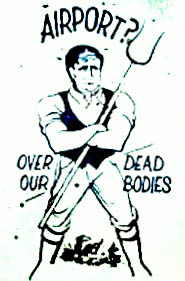
Twice within a decade, proposals for a major new London airport close to Great Brickhill threatened to transform the surrounding countryside. The Wing–Cublington campaign of 1969–71 became one of the best-known planning battles in the area, and concern returned in 1979 when Hoggeston was considered in a new airport study.
The Roskill Commission and Wing–Cublington
In 1968 the Government appointed a commission chaired by Mr Justice Eustace Roskill to examine where another major airport serving London should be built. From a much larger field, four sites were shortlisted in March 1969: Wing (Cublington) in Buckinghamshire, Foulness in Essex, Nuthampstead in Hertfordshire and Thurleigh in Bedfordshire.
The Buckinghamshire proposal centred on the rural landscape around Cublington and the former RAF Wing airfield. It would have required a very large four-runway airport and major supporting road, rail and service infrastructure. Great Brickhill was close enough for the proposal to be a serious local concern, particularly because of aircraft noise and the wider changes that such a development would have brought to the countryside and neighbouring settlements.
The Roskill Commission’s majority recommendation favoured Cublington. Professor Colin Buchanan dissented and preferred Foulness, arguing that the environmental damage of the inland site was too great.
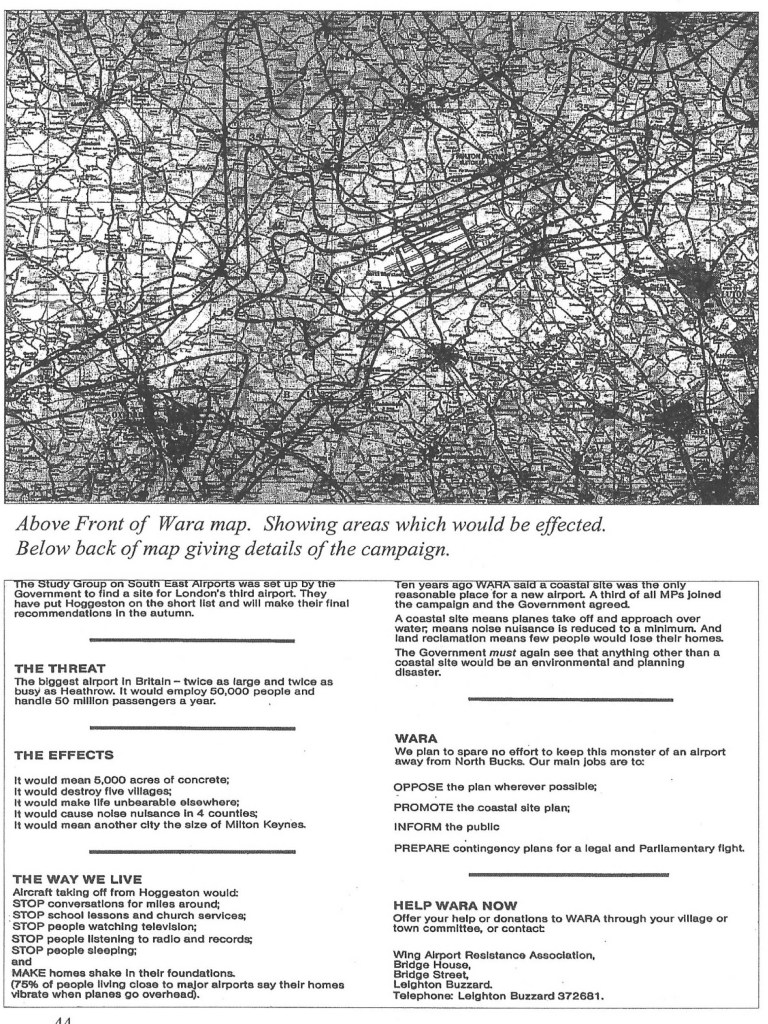
A major local campaign
The proposal brought villages across the Vale together in opposition. The Wing Airport Resistance Association — WARA — coordinated fundraising, expert evidence, publicity and demonstrations. Posters, placards and car stickers appeared throughout the district, while meetings and rallies attracted support far beyond the villages directly threatened.
Great Brickhill’s own voice survives in GBHP’s Our Village, Our Home — Third London Airport Battle, Round 1. Sir Philip Duncombe recalled the fear of aircraft noise and of the roads, communications and other development that would accompany the airport. His account also records the energy of the local campaign and the determination of people in Great Brickhill and neighbouring communities to support WARA.
The surviving local recollections are valuable because they record how the proposal was experienced at village level. Where later documentary evidence differs over precise numbers or distances, GBHP retains the recollection as a recollection rather than silently turning it into a modern factual claim.
Government rejects Cublington
After months of national and local debate, the Government rejected the Roskill majority recommendation. On 26 April 1971 it announced that the third London airport should instead be built at Foulness in the Thames Estuary, later associated with the Maplin project.
For Great Brickhill, Wing, Cublington, Stewkley and the other threatened communities, the immediate danger had passed. The Maplin project was itself later abandoned, but the Wing–Cublington campaign remained an important example of organised resistance to a development that would have transformed an established rural landscape.
The airport question returns
The story did not end in 1971. Airport policy was reconsidered later in the decade and WARA was reconvened in 1979 when Hoggeston, near Dunton and west of Stewkley, was named among a new group of possible sites. The proposal again raised the possibility of a major airport close to the same Buckinghamshire villages.

GBHP’s original account of this second campaign can be read at Our Village, Our Home — Third London Airport Battle, Round 2. In the wider policy process Stansted was selected for major expansion in December 1979, ending the renewed threat of a large airport in this part of Buckinghamshire.
Cublington Airport Monument and Spinney
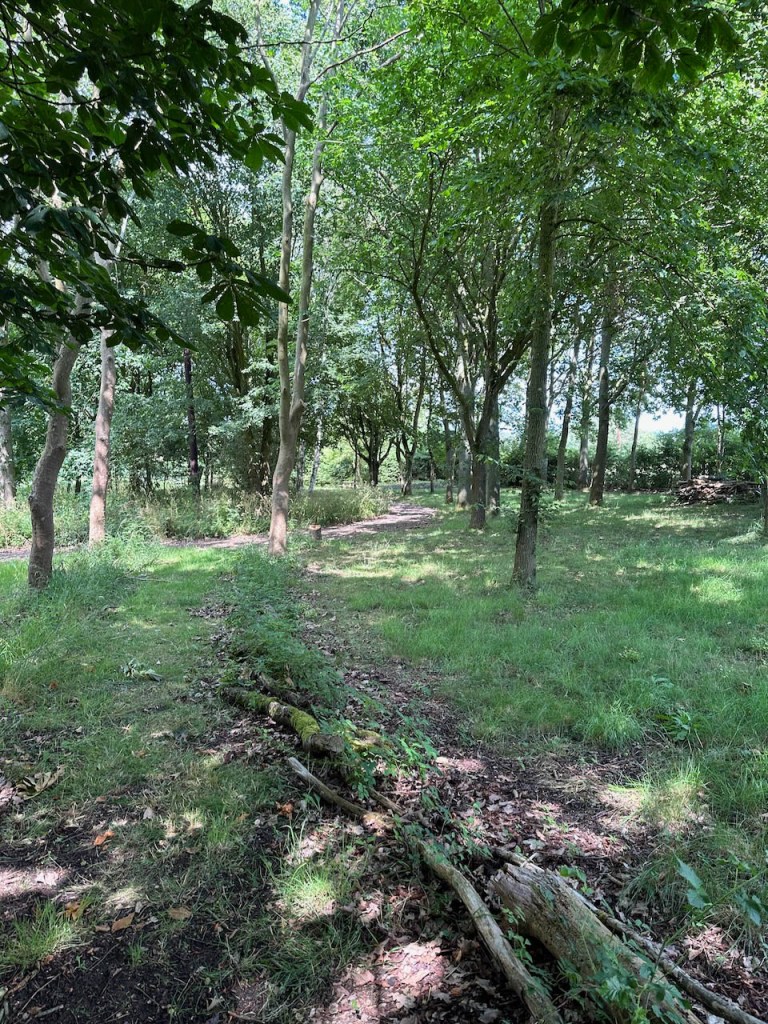
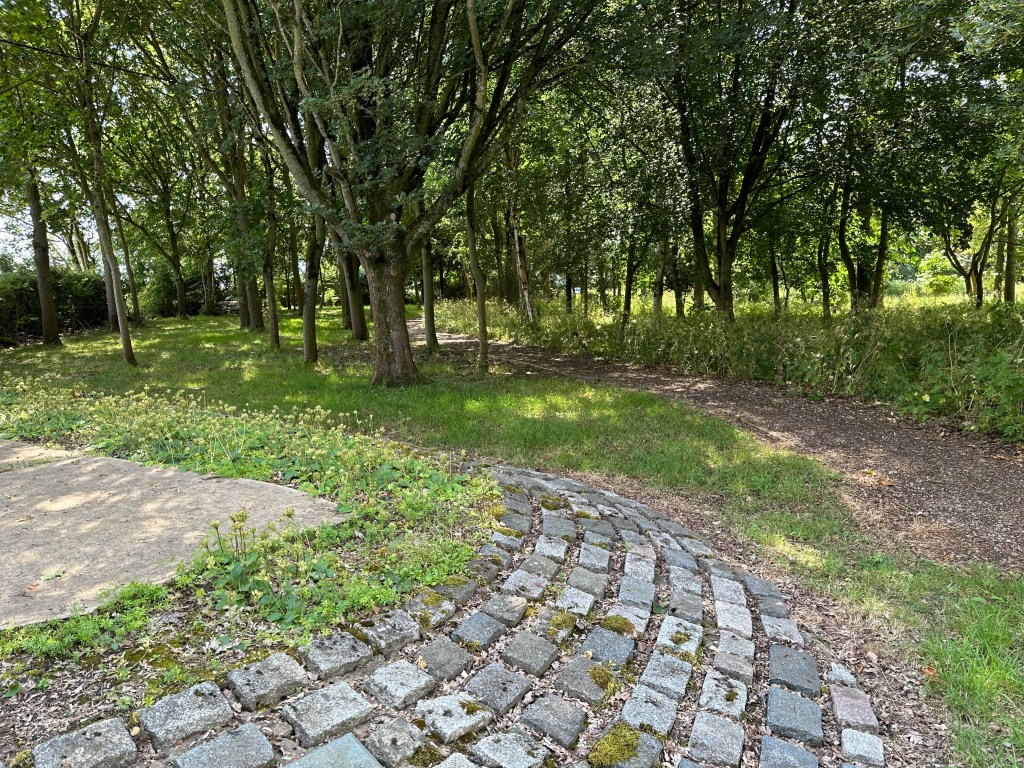
The campaign left a permanent mark on the landscape. In 1972 Buckinghamshire County Council created the Airport Monument and Spinney between Stewkley and Cublington. More than 400 trees were planted on the site, and a memorial shaped like Concorde marks the centre of the area that had been proposed for the airport.
The Spinney is on Dunton Road, north of Cublington, close to the road junction between Stewkley and Cublington. It remains a physical reminder that the airport was not simply a planning line on a map: it would have replaced villages, farms and countryside across a large part of the Vale.

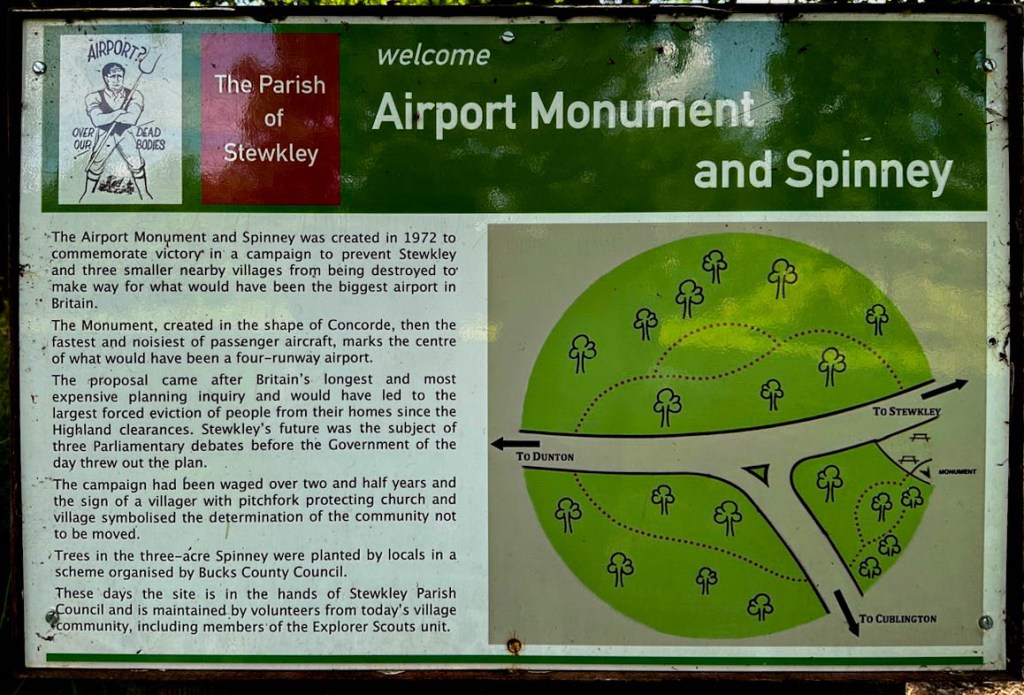
The notice board records the victory
The Airport Monument and Spinney was created in 1972 to commemorate victory in a campaign to prevent Stewkley and three smaller nearby villages from being destroyed to make way for what would have been the biggest airport in Britain.
The Monument, created in the shape of Concorde, then the fastest and noisiest of passenger aircraft, marks the centre of what would have been a four-runway airport.
The campaign had been waged over two and a half years and the sign of a villager with pitchfork protecting church and village symbolised the determination of the community not to be moved.
Trees in the three-acre Spinney were planted by locals in a scheme organised by Bucks County Council.
The monument and woodland turn an unsuccessful development proposal into a surviving heritage site. They also provide a useful link between the national planning story and the memories preserved in Great Brickhill.


Related GBHP material
- Our Village, Our Home — Third London Airport Battle, Round 1
- Our Village, Our Home — Third London Airport Battle, Round 2
- 1941–56 RAF Wing — No. 26 OTU
Further reading and sources
- Wingrave & Rowsham Heritage — Remembering a local environmental campaign
- Cublington village history — London’s Third Airport and WARA
- UK Parliament — Third London Airport: The Roskill Report, 22 February 1971
- UK Parliament — Government decision in favour of Foulness, 26 April 1971
- House of Commons Library — Aviation: proposals for an airport in the Thames estuary, 1945–2013